Yoga & Meditation
Move with Intention. Breathe with Awareness. Connect Within.
Yoga is an eight-limbed practice that extends far beyond physical postures, encompassing ethical principles, personal observances, movement, breathwork, concentration, meditation, and deeper states of awareness. Together, these elements offer a path toward greater connection between body, mind, and spirit.
My teaching honors this broader tradition while focusing primarily on asana (physical postures), pranayama (breath practices), and meditation. I weave together traditional yogic teachings, contemporary understanding of functional movement and the nervous system, and an appreciation for the energetic dimensions of our experience.
Whether you're drawn to movement, conscious breathing, meditation, or exploring your connection to the subtle body, we'll create a practice that reflects your individual needs, interests, and intentions.
Your Practice, Your Path
Yoga invites us to explore the many dimensions of ourselves—physical, mental, emotional, and energetic.
Whether you're seeking greater strength, a deeper connection with your breath, space for stillness, or an opportunity to explore your intuitive and energetic awareness, your practice can meet you where you are.
Together, we'll create space for exploration, connection, and a more embodied experience of yourself.
A Practice Rooted in Connection
The breath is the foundation of my teaching—a bridge between physical movement, nervous system awareness, and our internal experience.
Through asana, we explore how breathing, posture, stability, and mobility work together. Functional movement principles help us develop strength and coordination while respecting the body's individual structure and capabilities.
Pranayama and meditation invite us to explore beyond the physical mechanics of movement. Conscious breathing influences our physiological state while, within yogic philosophy, pranayama also works with prana—the vital life energy believed to animate and move through the body.
Through meditation, mudras, visualization, and mindful awareness, we can begin exploring the subtler dimensions of our experience, including the energetic qualities associated with the chakras and the flow of prana.
These practices are not isolated elements. They are interconnected ways of developing awareness, deepening our relationship with ourselves, and experiencing yoga as a practice of the whole person.
The Elements of Your Practice
These elements are woven together according to your interests and intentions, in any combination that feels meaningful to you.
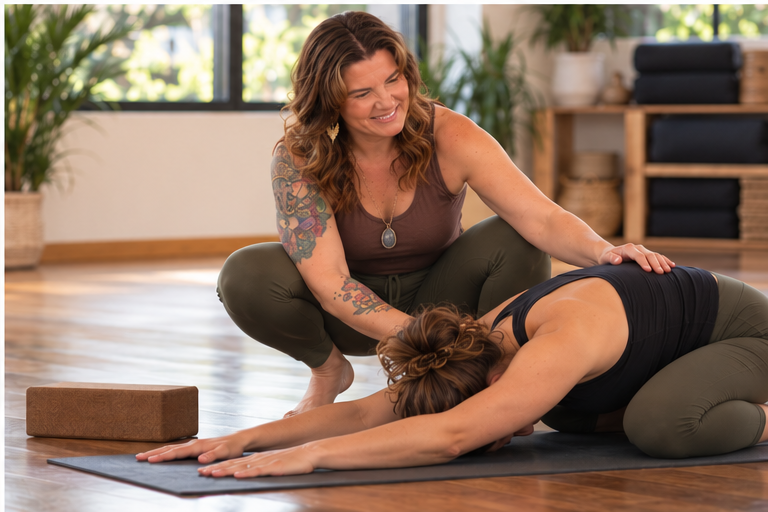
Asana — Mindful Movement
Explore physical postures through traditional Hatha yoga and functional movement principles. Practices may emphasize strength, mobility, balance, stability, or gentle restoration, with adaptations that respect your body's needs and capabilities.
Meditation — Cultivating Awareness
Create space for stillness, reflection, and self-discovery through guided meditation, visualization, concentration, and mindfulness practices. Meditation may also provide opportunities to explore intuition, inner awareness, and the subtle dimensions of your experience.
Pranayama — Conscious Breathing
Explore the breath as both a physiological process and an expression of prana, the vital energy described in yogic philosophy. Guided practices cultivate breath awareness, explore the relationship between breathing and the nervous system, and invite a deeper connection with your internal experience.
Subtle Body Awareness — Exploring Energy
Yogic traditions describe a subtle body composed of energetic pathways, or nadis, and centers of energy known as chakras. Through meditation, mudras, pranayama, and intentional movement, we can explore these concepts experientially and develop a more personal relationship with our energetic awareness.
Where Yoga Meets Energy & Intuition
In yogic philosophy, the subtle body offers a framework for understanding the movement of prana and the relationship between physical experience, awareness, and consciousness.
My exploration of these teachings has also deepened my connection to Reiki and intuitive practices. Although these traditions have distinct origins and approaches, I find meaningful connections in their shared emphasis on awareness, intention, and the experience of energy.
Yoga offers opportunities to explore these connections through movement, breath, meditation, and subtle body practices. Reiki invites a different experience of energetic connection through gentle, hands-on or hands-off practice, while intuitive work creates space to explore inner knowing and personal insight.
For me, these are complementary pathways toward greater self-awareness and connection.
You don't need to hold any particular spiritual beliefs to benefit from yoga, nor is energetic exploration a requirement of our sessions. You're welcome to engage with the aspects of the practice that resonate with you, whether physical, contemplative, spiritual, or a combination of all three.